Electrical & Electronics Engineering Department
Discover the well-structured infrastructure and learning environment of the Electrical & Electronics Engineering department, designed to strengthen technical knowledge, practical skills, and professional growth.
Interactive Learning Environment
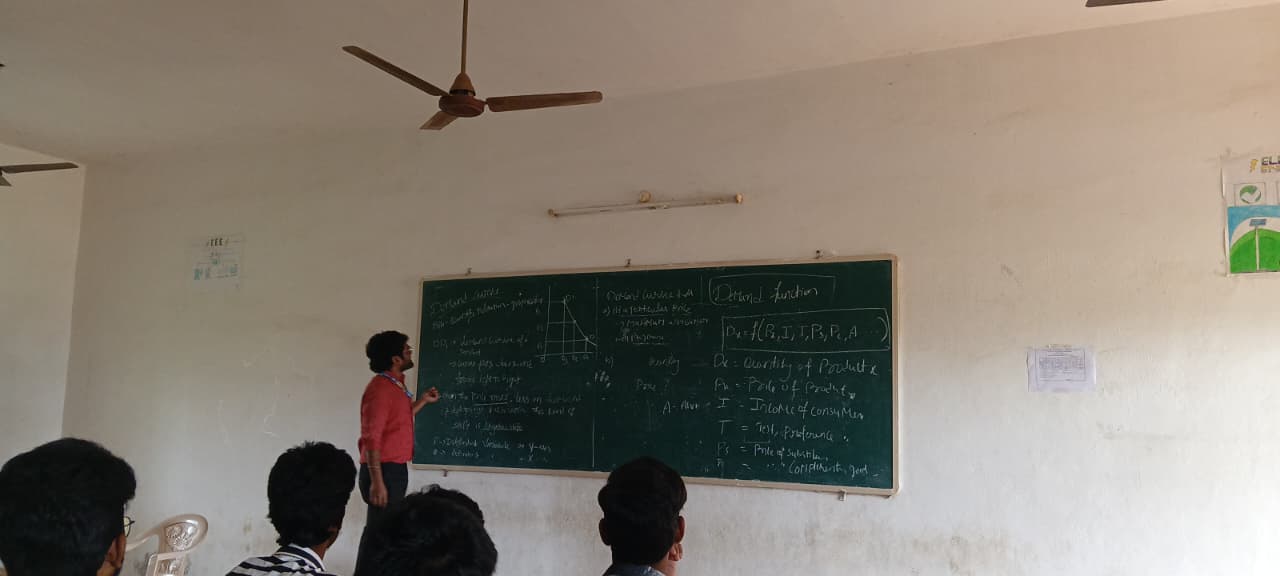
The Electrical & Electronics Engineering department provides a disciplined and focused academic environment that supports effective teaching and learning. Classrooms are designed to help students clearly understand electrical concepts through structured explanations and interactive discussions.
Faculty members emphasize conceptual clarity, numerical problem-solving, and real-world applications of electrical engineering principles. This approach helps students build a strong foundation required for higher studies and industry roles.
Highlights of Our Classrooms:
- Spacious and well-ventilated classrooms for focused learning
- Comfortable seating suitable for long theory sessions
- Clear board visibility for numerical and circuit explanations
- Calm academic atmosphere that encourages discipline and focus
Electrical & Electronics Laboratories
The EEE department houses well-equipped laboratories that provide hands-on training in core subjects such as Electrical Machines, Power Systems, Control Systems, Power Electronics, and Measurements.
Students perform experiments using real-time electrical machines and instruments, helping them understand practical applications of theoretical concepts. Safety, accuracy, and discipline are given high priority in all lab sessions.
Features of EEE Laboratories:
- Dedicated labs for Machines, Power Electronics & Control Systems
- Modern electrical equipment and measuring instruments
- Safe lab environment with proper supervision
- Support for mini projects and practical examinations

Experienced EEE Faculty & Mentorship
The EEE department is supported by a team of qualified and experienced faculty members who are committed to academic excellence and student development. They guide students through theory, laboratory work, and project-based learning.
Faculty members also mentor students in career planning, higher studies, and competitive examinations, helping them build confidence and technical competence.
Why Our Faculty Stand Out:
- Strong expertise in core electrical engineering subjects
- Guidance for projects, seminars, and technical activities
- Support for GATE, higher studies, and career preparation
- Student-friendly and mentoring-focused teaching approach

Smart Classrooms for EEE Learning
The EEE department uses smart classroom facilities to enhance conceptual understanding through visual explanations, diagrams, and simulations. These tools help students easily grasp complex electrical and electronic concepts.
Digital teaching aids support interactive learning, problem-solving discussions, and effective delivery of technical content.
Features of Smart Classrooms:
- Digital boards for circuit and waveform explanation
- Projectors for simulations and presentations
- Audio-visual teaching support
- Interactive learning environment for better understanding